Insights
Agentic Browsing: Is Your Website Ready for AI Agents?
By Lee Stephens · Published
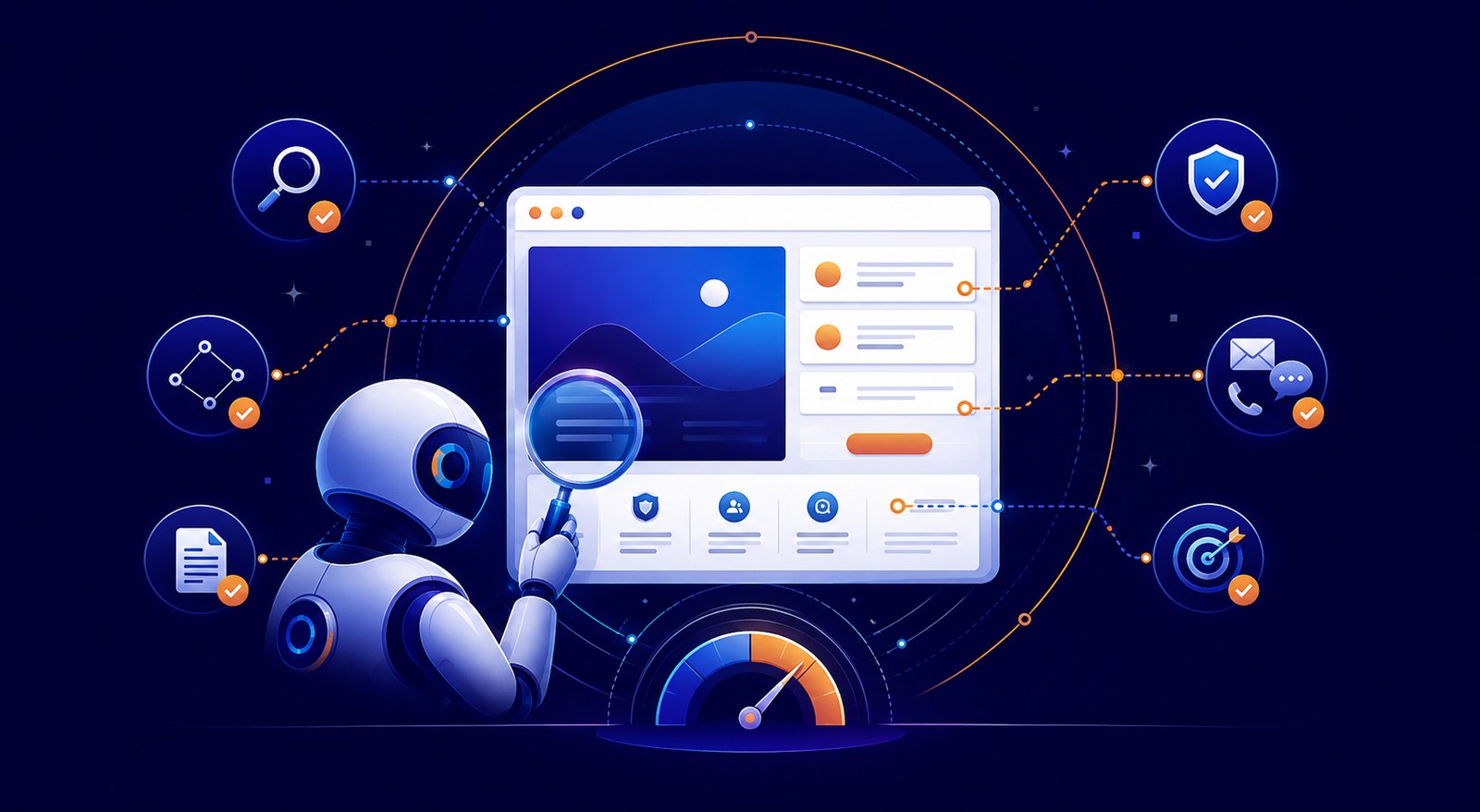
For most of the web’s history, websites have been designed for two audiences: people and search engines.
People visit a website, read its pages, compare services and click buttons. Search engines crawl the same website, interpret its content and decide whether it should appear in search results.
A third audience is now emerging: AI agents.
These agents can do more than retrieve information. They can browse websites, compare options, interpret instructions and, when appropriate systems and permissions are available, take action for a user.
This creates a new challenge for businesses.
A website can look professional to a person and still be difficult for an AI agent to understand or use.
What is agentic browsing?
Agentic browsing is the use of an AI system to navigate websites and perform tasks in pursuit of a defined goal.
A conventional search engine might return a list of links for “plumbers near me.”
An AI agent could potentially take the request several steps further:
- Identify plumbing businesses operating in the customer’s area.
- Determine which companies provide the required service.
- Compare availability, pricing signals and customer reviews.
- Find the correct quotation or booking process.
- Prepare or submit an enquiry with the customer’s approval.
The important distinction is that the agent is not simply finding information. It is attempting to move the customer closer to an outcome.
Depending on its capabilities and permissions, an AI agent could research products, compare suppliers, request quotations, make reservations, organise travel, complete forms or interact with business software.
This changes the role of a website.
A website is no longer only a collection of pages for people to read. It is becoming an environment that humans and software agents must both be able to discover, interpret and use.
How agentic browsing differs from ordinary browsing
During ordinary browsing, a person interprets the page.
A human can frequently work around vague navigation, inconsistent terminology or poorly structured information.
Traditional browsing
Agentic browsing
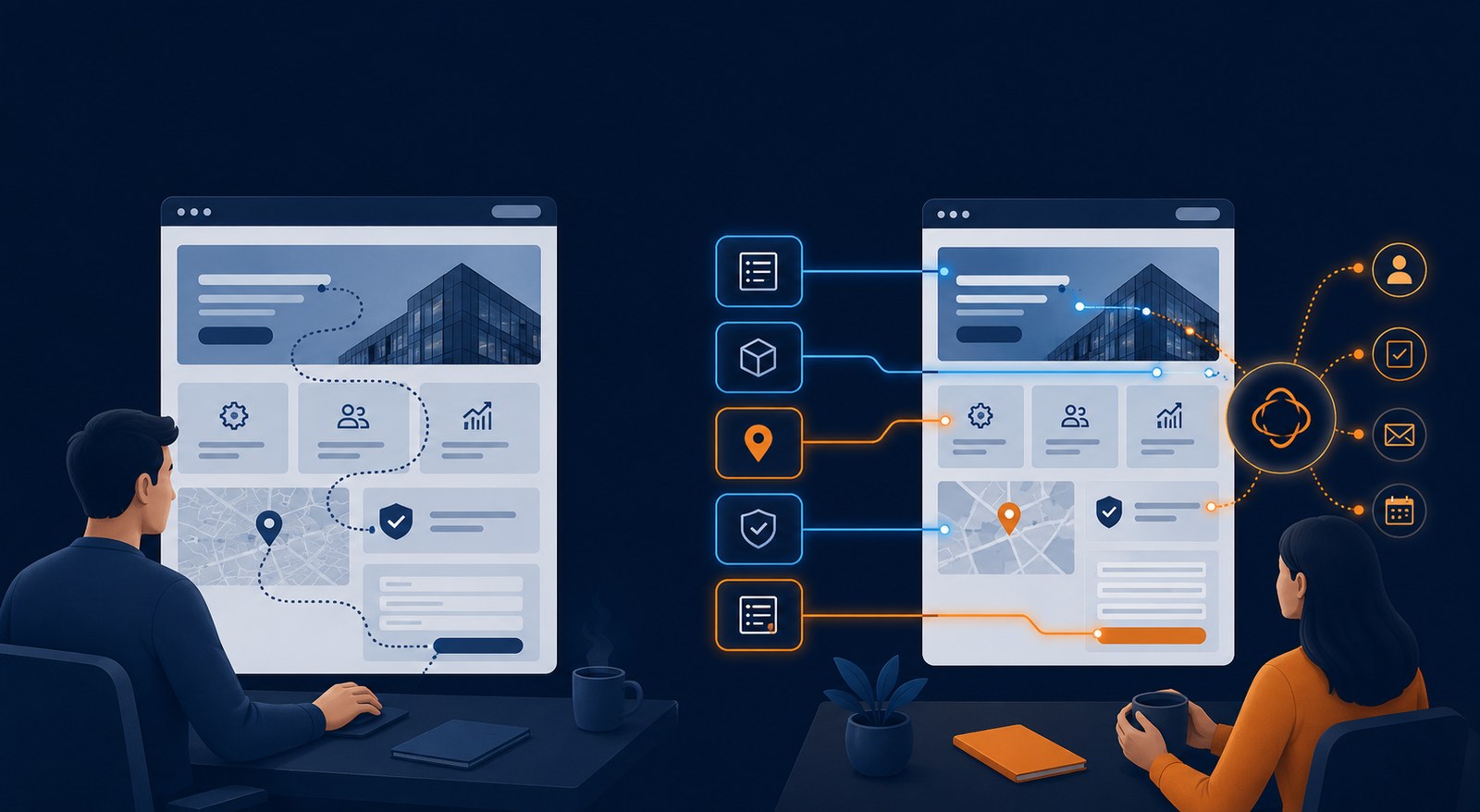
We may infer that “Let’s Talk” opens a contact form. We can recognise a telephone number embedded in an image. We might understand from surrounding context that a business serves one particular city, even if its service area is never stated clearly.
An AI agent will not necessarily make those connections reliably.
It benefits from explicit answers to basic commercial questions:
- What does this business provide?
- Who does it serve?
- Where does it operate?
- What is the primary action available?
- What information is required to complete that action?
- Is the business identity clear?
- Are its trust claims supported?
- Can its forms be interpreted correctly?
Agentic browsing can therefore reveal weaknesses that a visual website review might overlook.
A button can look obvious while carrying an ambiguous label. A contact form can appear simple but have fields that are not properly labelled. A service may be described through persuasive marketing language without ever being clearly defined.
These are not merely technical weaknesses. They can become commercial weaknesses if an AI-assisted customer cannot progress.
Readable does not necessarily mean actionable
Many conversations about AI readiness concentrate on whether an AI system can read a website.
That is only the first step.
An agent may successfully extract the text from a page but still be unable to determine:
- Which service is relevant to the customer.
- Whether the business operates in the required location.
- Which button represents the main next step.
- Whether a form requests a quotation, creates a booking or joins a mailing list.
- What information the customer must supply.
- Whether the business appears credible enough to recommend.
An agent-ready website needs to support three broad capabilities.
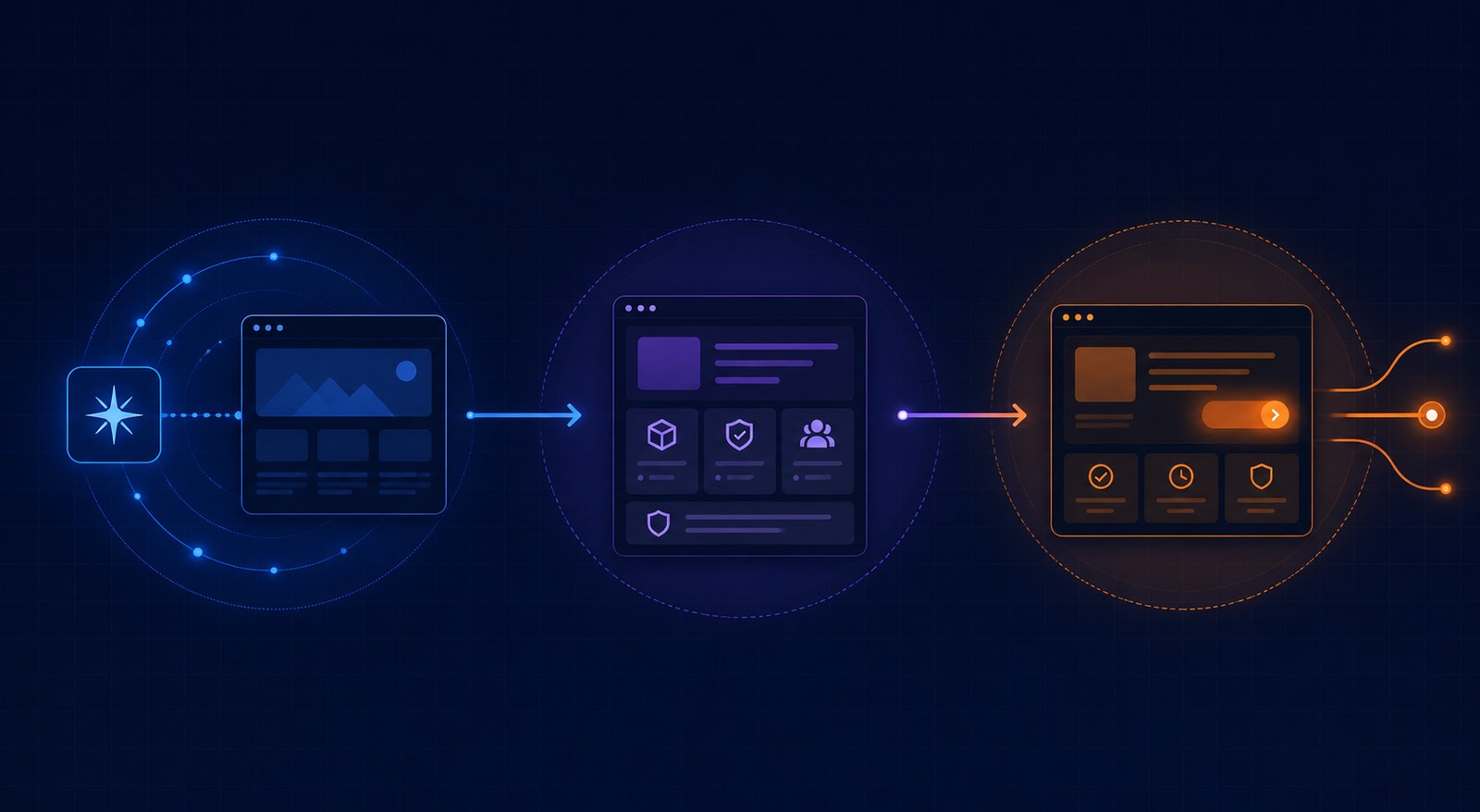
Discoverable
Understandable
Actionable
1. Discoverable
Can an agent find the website, its important pages and the relevant information?
2. Understandable
Can it accurately interpret the business, services, locations, trust information and available options?
3. Actionable
Can it identify a reliable path for completing or preparing the customer’s intended action?
These stages are closely connected to ordinary website conversion.
Clear service descriptions, visible calls to action, complete contact details and properly labelled forms benefit AI agents and human customers alike.
WebMCP and agent-accessible websites
One developing approach to agent interaction is WebMCP.
WebMCP is a proposed web standard that allows websites to expose selected functionality as structured tools for compatible AI agents. Instead of forcing an agent to infer how a visual interface operates, a website can describe the actions it makes available.
These actions might include:
- Searching products or services.
- Checking appointment availability.
- Requesting a quotation.
- Retrieving public information.
- Running a diagnostic.
- Returning a structured report.
The normal website remains available to human visitors. WebMCP provides an additional layer through which compatible agents can identify and invoke approved capabilities.
The WebMCP specification describes web pages as being able to expose application functionality through structured JavaScript tools. Chrome’s WebMCP documentation describes the technology as a proposed standard intended to improve the performance and reliability of agent actions on websites.
AG AgentReady provides a working example.
According to the AG AgentReady research methodology, the website exposes five in-page WebMCP tools in a compatible environment:
run_website_scancheck_webmcpget_scan_reportsearch_webmcp_directoryget_directory_listing
AG AgentReady also provides a separate remote Model Context Protocol endpoint for compatible external AI clients.
Both routes use the same underlying public diagnostic capabilities. Private information, payment records, locked findings and moderation functions are not exposed to agents.
This distinction is important. Making a website accessible to agents does not mean giving those agents unrestricted control.
A business can decide:
- Which capabilities are exposed.
- What information is public.
- What actions require customer approval.
- What information must remain private.
- What operational limits should apply.
What early WebMCP adoption looks like
The AG AgentReady WebMCP Directory tracks websites where WebMCP capabilities or related implementation signals have been observed.
As of , the directory contained 14 websites across software, retail, travel and financial services.
Examples included:
- Reebok
- Alo Yoga
- NETGEAR
- Fever
- Zapier
- Vercel
- Render
- QuickNode
- Openfort
- Forter
- Cloudflare
- Away Travel
The implementations were not all identical.
At the time of verification, AG AgentReady reported ten live WebMCP tools on both Reebok and Alo Yoga, six on Zapier, five on Render, five on QuickNode and one on Vercel.
Away Travel and Cloudflare were listed as having WebMCP signals in their source, although live tool discovery had not been confirmed.
That distinction matters.
A source-level signal suggests that a website contains a WebMCP implementation or related preparation. Runtime verification provides stronger evidence because the tools were discovered live in a compatible environment.
These examples do not prove that the wider web has already adopted WebMCP. They show that practical implementation has begun across multiple industries.
What website scans are revealing
AG AgentReady publishes aggregated benchmark data from websites submitted to its readiness scanner.
As of , the State of AI Customer Readiness benchmark contained 36 distinct websites.
The mean scores were:
- Overall Website Readiness: 49.2
- Agent Readiness: 51.3
- Revenue Readiness: 47.7
- Trust and Clarity: 49.4
None of the websites fell into the benchmark’s “Good” or “Excellent” overall score bands.
Twenty websites were classified as “Fair,” while 16 were classified as “Needs Improvement.”
Some of the most frequently observed failures were surprisingly fundamental:
- The main action was not visible early on the page.
- Direct contact methods were difficult to reach.
- Contact details were not machine-readable.
- Actions were ambiguous to an agent.
- LocalBusiness structured data was absent.
- Service structured data was absent.
- Forms were not clearly labelled and parseable.
- The customer’s next step was not adequately explained.
These findings suggest that agent readiness is not exclusively an advanced technical problem.
Many websites first need to improve their basic commercial structure: clearer offers, stronger calls to action, accessible contact routes, appropriate structured data and less ambiguous forms.
A necessary limitation
The AG AgentReady research corpus remains small and self-selected.
Website owners may choose to run a scan because they already suspect their website has a problem. That may bias the corpus towards weaker websites.
The benchmark should therefore be treated as directional evidence, not a census of the entire web.
The figures also measure observable website signals. A high score does not guarantee more traffic, enquiries or revenue.
Why agentic browsing matters commercially
The strongest reason to pay attention to agentic browsing is not that people will suddenly stop visiting websites.
The more realistic development is that AI assistants will increasingly influence how customers discover, compare and shortlist businesses.
A customer may ask an assistant:
- “Find three roofers near me that handle insurance repairs.”
- “Compare these accounting firms and tell me which one works with construction companies.”
- “Find a hotel near the venue with parking and late check-in.”
- “Identify a suitable software platform and compare its pricing.”
- “Find two companies that can provide this service and help me request quotations.”
In these situations, the agent becomes an intermediary between the customer and the business.
If the agent cannot establish what a company offers, where it operates, whether it is trustworthy or how the customer should proceed, that business may never reach the shortlist.
The lost opportunity may occur before a human customer visits the website.
Agent readiness should therefore be considered part of customer readiness.
What businesses should do now
Most organisations do not need to rebuild their websites immediately or implement every emerging agent protocol.
They should begin with a more practical question:
Can an AI system accurately understand our business and identify the correct next action?
Make the offer explicit
The homepage should state what the business provides, who it serves and where it operates.
A clever headline should not replace basic commercial clarity.
Establish one primary action
A page containing several competing calls to action creates uncertainty.
The main next step should be specific and visible.
“Request a Quote” is more informative than “Get Started.”
“Book an Assessment” is more precise than “Let’s Talk.”
Publish complete business information
The company name, service area, contact methods and relevant operating details should be easy to locate.
Important information should be published as accessible text rather than hidden inside images.
Improve semantic structure
Pages should use logical headings, clear sections and appropriate HTML landmarks.
Good semantic structure helps agents, search engines, assistive technologies and human visitors interpret content.
Review forms
Every field should have a clear label.
The purpose of the form, information required, expected response and next step should be explained.
Add appropriate structured data
Structured data can help machines interpret the business, services, locations, articles and contact information.
It must accurately reflect the visible content. Schema markup cannot compensate for an unclear website.
Control crawler access intentionally
Businesses should review which search and AI crawlers are allowed to access their public content.
OpenAI distinguishes between OAI-SearchBot, which supports discovery in ChatGPT search experiences, and GPTBot, which relates to potential model training. These can be managed separately through crawler controls, as described in the OpenAI crawler documentation.
Investigate agent-facing capabilities
Once the website fundamentals are sound, the business can evaluate WebMCP or remote MCP capabilities.
The right tools should reflect genuine customer actions rather than expose technology for its own sake.
Measure before rebuilding
Readiness should be assessed through observable evidence rather than assumptions.
AG AgentReady assesses observable Agent Readiness evidence and runtime WebMCP capabilities where available. Separately, its research benchmark uses deterministic Revenue Readiness, Agent Readiness and Trust & Clarity scores across up to five public pages. A language model may help express summaries and recommendations, but it does not determine those benchmark scores.
The next layer of customer experience
Agentic browsing does not make traditional website design irrelevant.
Websites still need to communicate credibility, persuade people and provide a strong visual experience.
Agentic browsing adds another layer.
Businesses increasingly need to communicate with systems that do not interpret a page in exactly the same way as a person.
The organisations that prepare successfully will not necessarily be those with the most complicated AI integrations.
They will be those that make themselves easiest to:
- Discover.
- Understand.
- Trust.
- Act upon.
That begins with clarity.
What do you provide?
Who is it for?
Where is it available?
Why should it be trusted?
What should happen next?
These questions have always mattered in marketing and website conversion. Agentic browsing is turning them into machine-level requirements as well.
The next visitor to a business website may not be a person browsing alone.
It may be an AI agent helping that person decide where to spend their money.
Is your website ready for AI agents?
Run a free AG AgentReady scan to inspect what AI agents can discover, understand and use on your website, including agent-facing actions and WebMCP evidence where available.
No signup is required.
Run Free Website Scan